Setting up a compact bio-organic fertilizer production facility requires more than choosing the right machines. A well-structured plant layout helps reduce labor, maintain product quality, and streamline the fermentation-to-granulation process. Many small operators start with limited land and mixed organic materials such as livestock manure, crop residues or kitchen waste. A clear step-by-step design approach makes the whole organic fertilizer manufacturing workflow more efficient and cost-effective.
1. Define Raw Materials and Fermentation Requirements
The first step in planning a small organic fertilizer plant is identifying the feedstock. Manure-based materials, biowaste, digestate, and green waste each have different moisture levels and require different pretreatment methods. Knowing the C/N ratio, water content, and impurity level helps determine whether you need crushing, mixing, or premixing steps. Fermentation method selection—windrow composting, trench composting, or an in-vessel system—also depends on the raw material scale and local environmental policy.
2. Organize the Composting and Processing Zones
A small biofertilizer facility usually divides the site into several functional sections.
- Raw material receiving area where waste is unloaded and stored.
- Composting zone designed for aerobic fermentation, usually placed downwind for better odor control.
- Post-fermentation area used for aging, screening, and impurity removal.
Keeping these zones in a logical sequence reduces unnecessary material movement. For microbial organic fertilizer production, allocating a sheltered area for inoculation also helps maintain microbial activity.
3. Select Essential Equipment for Small-Scale Plants
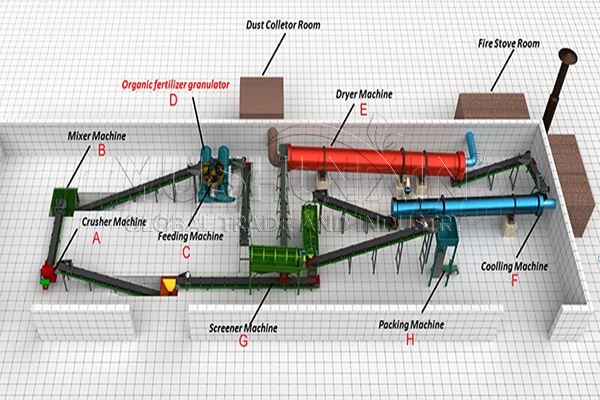
Most small organic biofertilizer plants use a simple but effective configuration: a compost turner for aeration, a crusher to break down agglomerates, a mixing machine for adding nutrients or beneficial microbes, and a screener for particle size classification. If granulation is required, a compact granulator such as a disc pelletizer or a small roller press can form stable compost-based fertilizer pellets. Supporting units like a belt conveyor, packing scale, and dust control system complete the basic setup. Learn more!
4. Plan Material Flow and Worker Movement
A streamlined material path is crucial. Raw materials should move in a single forward direction: receiving → composting → crushing/mixing → granulation or screening → packaging. Minimizing backtracking reduces labor intensity and prevents cross-contamination. At the same time, designing a clear walkway for workers improves safety and daily operation efficiency.
5. Consider Land Area, Utilities, and Future Expansion
Even a small organic biofertilizer factory benefits from thoughtful space planning. Allow enough room for truck access, rainfall drainage, and storage of both finished products and seasonal raw materials. Electricity, water supply, and ventilation should match the processing capacity. Reserving extra space for future expansion makes it easier to upgrade from a simple compost system to a full biofertilizer production line. If you need a business plan, you can visit: https://www.biofertilizerproduction.com/product/bio-organic-fertilizer-production-line/