BB fertilizer production is different from traditional granulation. It does not usually create new granules from powder materials. Instead, it blends several finished granular fertilizers into a balanced formula. Common materials may include urea, DAP, MOP, ammonium sulfate, and other granular nutrients. In this process, stable mixing is very important because every bag should contain a consistent nutrient ratio.
A drum blending system is often used for this purpose because it can process granular materials gently and continuously. For fertilizer manufacturers, traders, and agricultural supply companies, understanding how the equipment works can help them choose a better production solution.
What Happens Inside the Drum?
The main working part is a rotating cylindrical drum. When different fertilizer granules enter the drum, the rotation lifts and rolls the materials. As the granules move forward, they repeatedly fall, turn, and mix with each other. This creates a continuous blending effect without strong cutting or crushing.
This is why many BB fertilizer producers prefer a BB fertilizer blender for granular fertilizer formulas. It helps reduce particle breakage while maintaining good mixing performance. For BB fertilizer, this is especially important because broken granules may create dust, affect product appearance, and cause nutrient separation during packaging or transport.
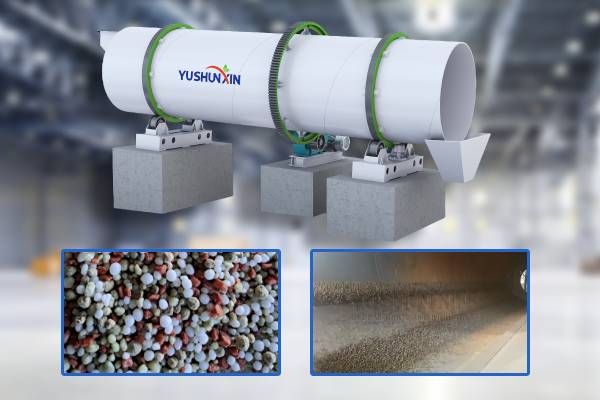
Why Is Rotary Drum Blending Suitable for BB Fertilizer?
A rotary drum fertilizer blender is suitable for BB fertilizer because it matches the physical nature of the raw materials. Most BB fertilizer raw materials are already dry and granular. They do not need drying, cooling, or granulation again. What they need is accurate proportioning and uniform blending.
Before materials enter the drum, they are usually measured by a batching system. Each raw material is discharged according to the formula. After that, the mixed materials move into the drum for blending. The final product can then be sent to a packaging machine. This makes the whole process simple, efficient, and easy to automate.
How Does the Blending Process Affect Product Quality?
To understand how fertilizer rotary drum blender work, you need to look at three key factors: rotation speed, drum angle, and retention time. If the drum rotates too slowly, the materials may not mix fully. If it rotates too fast, granules may be damaged. If the materials stay inside the drum for too short a time, the final formula may not be uniform.
A well-designed drum system keeps these factors balanced. It allows materials to move smoothly from feeding to discharge. At the same time, it gives enough mixing time to improve formula consistency.
What Should Buyers Consider Before Purchasing?
When buyers search for a drum type BB fertilizer mixer for sale, they should not only compare machine price. They should also check capacity, material contact parts, anti-corrosion design, feeding accuracy, discharge method, and whether the mixer can connect with automatic packaging equipment.
For example, a 30 tph rotary BB fertiizer production project needs a stronger frame, stable feeding system, larger drum volume, reliable conveyors, and a matched packing system. If one section is too small, the whole line may lose efficiency.
Conclusion
In BB fertilizer production, drum blending is a practical and efficient solution. It keeps the process simple, protects finished granules, and supports continuous production. For buyers planning a new BB fertilizer plant, the key is not only choosing a mixer, but designing a complete system that matches raw materials, formula needs, capacity, and packaging requirements. If you are interested in the machine, you can visit https://www.mixedfertilizermachines.com/products/rotary-drum-blender/