A vegetable processor, a potato factory, or a seafood plant that plans a 500 kg/h line needs a blancher that matches that throughput without oversized energy use. The industrial food blancher machine for a 500 kg/h processing line offers adjustable belt width, blanching length, and heating method, and the sizing decision starts with those three variables. This article explains how a buyer fits the blancher to a 500 kg/h food processing line.
Which Belt Width and Length Fit a 500 KG/H Line?
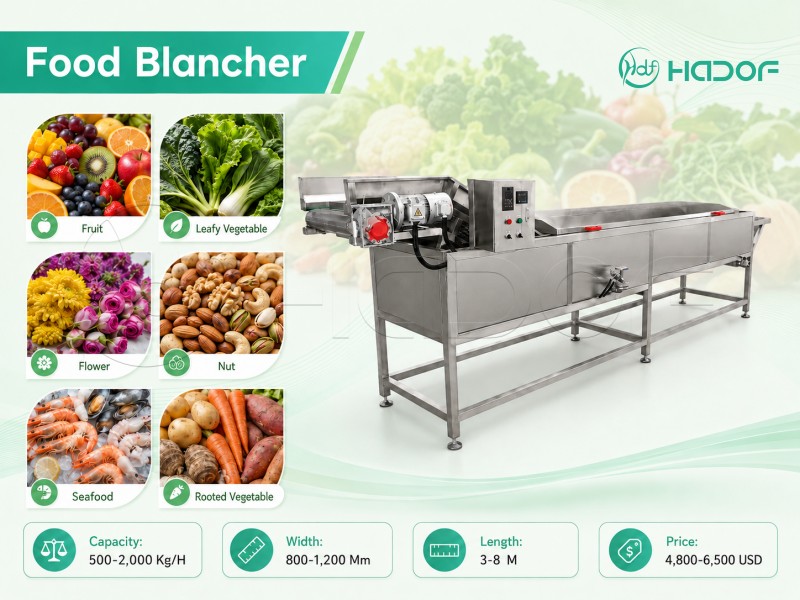
Belt width and blanching length set how much product the machine carries and how long it stays in hot water. The continuous hot water blancher with adjustable belt width supports 800 mm, 1,000 mm, and 1,200 mm belts with effective lengths of 3 m, 5 m, or 8 m, so a 500 kg/h line picks a width and length that keep the load even. A wider, longer tank gives the product more dwell time without raising the belt speed too far. A buyer who checks these dimensions first avoids a food manufacturing bottleneck at the blanching stage.
How Does Heating Method Affect the Sizing Decision?
The heating method changes both the energy cost and the temperature control, and a buyer chooses steam, electric, or gas for the local utility and the product. The steam and electric food blancher for vegetable processing keeps water between about 80 and 100 degrees Celsius with intelligent sensors and a circulation system. A 500 kg/h line needs a heating source that recovers quickly as cold product enters the tank. The right heating method therefore keeps the food equipment temperature stable across the shift.
How Does the Blancher Connect With Cooling and Drying?
A blancher never works alone, because the product must cool quickly after the hot bath and then drain before the next stage. The cooling section lowers the product temperature, and the line then feeds a dewatering conveyor, an air dryer, or a quick freezer. A 500 kg/h line matches the cooling and drying capacity to the blancher so the food processing flow stays continuous. This connection prevents a hot, wet product from sitting between machines.
How Should a Buyer Verify the Sizing Before Purchase?
A buyer verifies the sizing with a trial on its own product, because leaf, root, and seafood products each behave differently in hot water. The supplier helps a factory choose the belt width, length, and heating method for the real 500 kg/h target. This check keeps the food machinery sized to the actual menu instead of a catalogue number. A measured trial turns the sizing decision into a dependable food investment.
How Does the Blancher Fit a Complete Vegetable Line?
Hot water blanching belongs between washing and freezing, so the blancher connects with a washer, a cutter, and an air drying equipment after blanching stage. You can review the food blancher manufacturer before a purchase, because engineering support helps match the blancher to the surrounding line. A well placed blancher keeps the food production line efficient at 500 kg/h.
Conclusion
A factory sizes an industrial food blancher for a 500 kg/h line by choosing the belt width and length, the heating method, and the cooling and drying connections that match that throughput. These choices keep the blanching stage stable and efficient. If you have interests, you can learn more about https://www.hadofps.com/products/food-blancher/