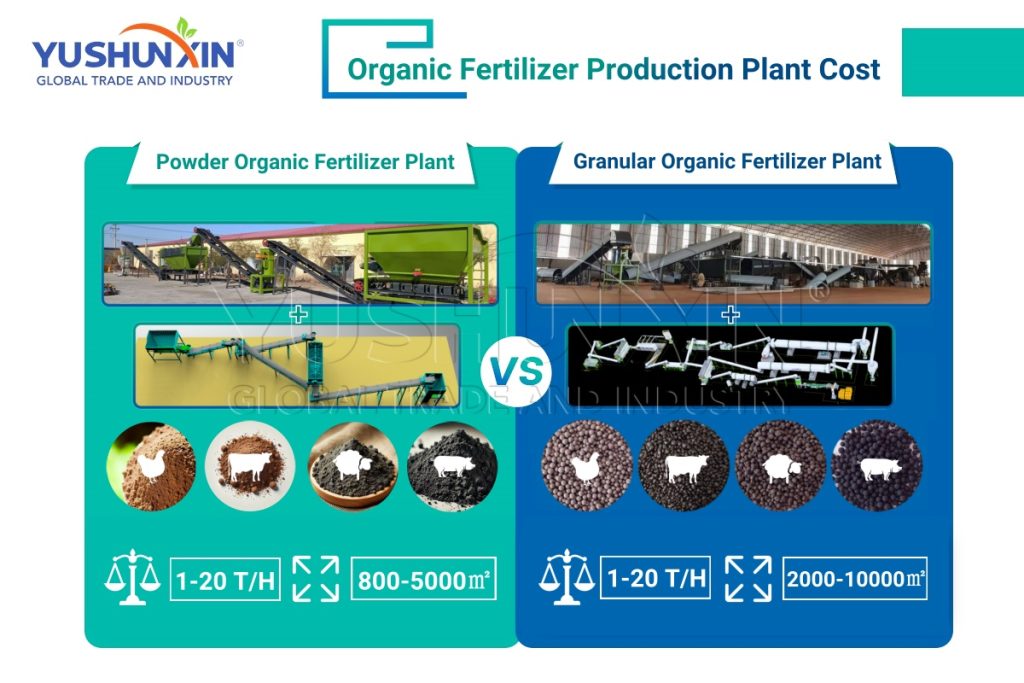
The organic fertilizer market continues to expand as more customers seek eco-friendly soil nutrients. However, the key question for every fertilizer manufacturer concerns the organic fertilizer production plant cost. When a company invests in a new organic fertilizer granulation line, cost-effectiveness determines its profitability and long-term competitiveness. Achieving a lower fertilizer manufacturing plant cost requires careful selection of raw materials, suitable granulating machinery, and an optimized production procedure. Understanding how each factor influences operating expenses allows a fertilizer factory to make rational decisions and increase return on investment.
Section 1: What Raw Materials Offer High Quality with Low Organic Fertilizer Plant Cost?
Raw material selection directly affects both the cost and performance of organic fertilizer powder or granule products. Many types of biodegradable materials can serve as sources for organic fertilizer powder production, such as livestock manure, poultry droppings, agricultural residues, crop straw, sugar mill filter mud, biogas residues, and household composted waste. Each source provides valuable organic matter and nutrients, but different materials require distinct processing procedures.
Livestock manure and crop residues often appear as popular choices because they are abundant, inexpensive, and rich in organic content. When a fertilizer producer builds a plant near livestock farms or agricultural processing facilities, transportation costs decline significantly. In this way, the fertilizer plant setup cost remains within a reasonable range. The moisture content and particle size of raw materials also influence the overall granulation process. Therefore, a crushing machine and compost machine become essential in the early stage to adjust material uniformity and fermentation quality before granulating. Selecting cost-efficient local materials and balancing nutrient composition can reduce the total organic fertilizer production plant cost while ensuring stable supply and environmental benefits.
Section 2: How Do Equipment Choices Optimize Organic Fertilizer Granule Production Efficiency?
The production line design determines the energy consumption and maintenance cost of the plant. Each stage of organic fertilizer granule processing requires specialized machinery. A compost machine, such as a groove type or wheel type compost turner, promotes microbial activity and shortens the fermentation cycle. After fermentation, a crushing machine reduces particle size, and a batching machine ensures accurate nutrient proportioning. These steps prepare the materials for the granulating stage, which shapes them into uniform fertilizer granules.
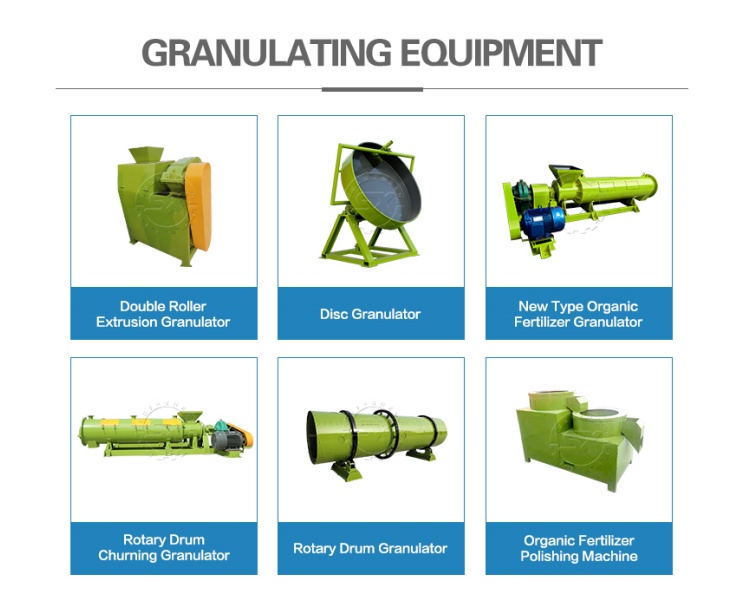
Different granulators create different results. A disc granulator provides simple operation and low investment for small-scale plants. A double roller extrusion granulator reduces drying cost because it works at room temperature and delivers stable pellet shapes. A drum granulator suits large-capacity organic fertilizer manufacturing lines because it provides continuous production and high granulation rate. Choosing an appropriate granulating machine directly influences the organic fertilizer plant cost, as energy usage, maintenance frequency, and output rate vary among designs. After granulation, a rotary drying machine, screening machine, and packing machine complete the process. When all equipment operates smoothly and matches capacity requirements, the overall fertilizer factory cost decreases because material waste and downtime reduce noticeably.
Section 3: How Can a Producer Balance Investment and Quality in Organic Fertilizer Pellet Production?
A fertilizer manufacturer needs a balanced perspective between equipment investment and product quality. Organic fertilizer pelletizing efficiency depends on the coordination of each machine and the proper process layout. For example, high moisture materials require additional drying equipment, which increases power consumption but ensures product stability during storage. Similarly, precise batching and screening improve granule uniformity and market competitiveness. By analyzing the actual production scale and local resource conditions, a fertilizer plant can determine whether to adopt a semi-automatic or fully automatic line to control the organic fertilizer production plant cost.
Continuous attention to maintenance and process optimization also supports long-term cost efficiency. Regular inspection extends machinery life and reduces unplanned shutdowns. When a plant designer considers energy recovery systems, such as heat reuse from the drying section, operational expenses become lower, and environmental performance improves. Therefore, cost-effectiveness in organic fertilizer granule making does not rely solely on cheaper equipment, but on a comprehensive production management strategy that maximizes efficiency at every stage.
Conclusion
Cost-effective organic fertilizer granule production requires integration of raw material selection, equipment configuration, and process management. When a fertilizer producer chooses proper feedstock, applies efficient composting and granulating machines, and designs a reasonable production procedure, the organic fertilizer manufacturing plant cost remains competitive. Reliable equipment quality guarantees stable output and reduces maintenance expenses, which directly enhances profit margins. For enterprises that plan to establish or upgrade an organic fertilizer granulation line, cooperation with a professional fertilizer equipment manufacturer—Yushunxin—can provide technical guidance, customized machinery, and comprehensive solutions to ensure both product quality and optimal organic fertilizer production plant cost. You can visit: https://www.fertilizerproductequipment.com/organic-fertilizer-production-plant-cost/