When you plan to build a fertilizer production project, production capacity is often one of the first questions you need to answer. A suitable plant design helps you balance investment, operation efficiency, raw material flexibility, and future expansion. Whether you are starting a new fertilizer business or upgrading an existing facility, choosing the right configuration can make your project smoother.
Match Plant Design With Your Production Goals
A bulk blending fertilizer plant can be designed according to different output requirements, from small commercial operations to large-scale fertilizer production facilities. Your expected market demand, available raw materials, and sales plan all influence the final capacity selection.
For smaller projects, a compact blending system may provide a practical solution with lower investment and easier management. For larger fertilizer producers, an industrial bulk blending fertilizer plant offers higher automation levels, continuous operation, and greater production efficiency.
Before selecting equipment, you can evaluate your target output, working hours, storage capacity, and packaging requirements. These details help create a plant layout that matches your actual business conditions.
Select Equipment Based On Capacity Requirements
Different production capacities require different equipment combinations. A small BB fertilizer production line may focus on accurate weighing and efficient mixing, while a large project requires stronger conveying, batching, and control systems.
When planning a medium or large-scale project, working with an experienced fertilizer blending plant manufacturer Europe can help you understand equipment matching, installation space, and production workflow.
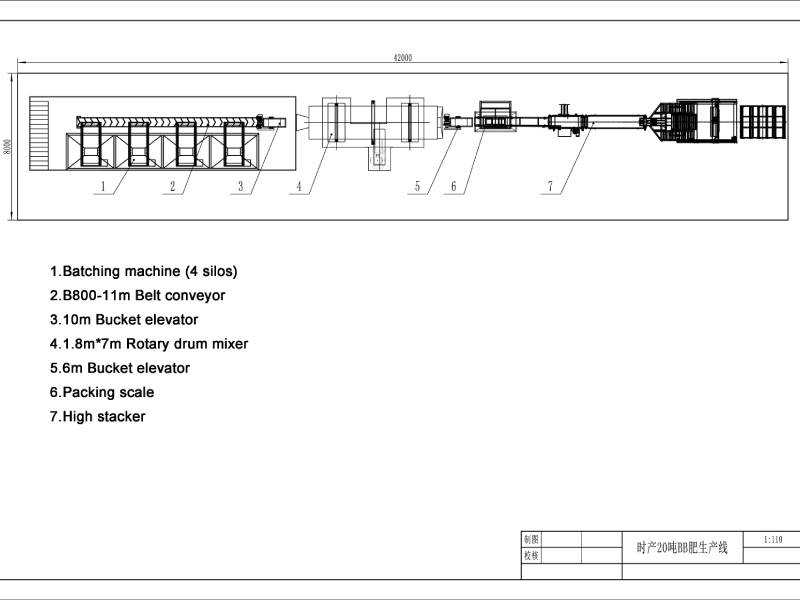
For example, a 20 ton per hour bulk blending fertilizer plant usually involves automatic batching systems, high-efficiency mixers, conveying equipment, and packaging solutions. This type of configuration supports higher output while maintaining consistent fertilizer quality.
Consider Investment And Long-Term Operation
Budget planning is another important part of fertilizer plant design. The BB fertilizer plant cost can vary depending on production capacity, automation level, equipment selection, and customization requirements.
A basic blending system may require less investment, while a fully automatic plant with advanced control functions requires a larger budget but can reduce manual operation and improve production stability.
You can also compare different fertilizer production methods before making a decision. Understanding BB fertilizer plant vs NPK fertilizer plant helps you choose a solution that fits your raw materials, product type, and market demand.
Build A Flexible Solution For Future Growth
Your fertilizer business may expand over time, so plant flexibility is worth considering during the design stage. A well-planned layout allows additional equipment, higher capacity, or new fertilizer formulas to be added more easily.
From raw material handling to final packaging, every section affects daily operation. A customized design gives you a clearer path from the first investment to future development.
If you want to learn more about equipment selection, production capacity planning, and project solutions, Click here for more details.
Choosing the right configuration for your fertilizer project starts with understanding your production needs. Shunxin provides bulk blending fertilizer plant solutions covering design, equipment manufacturing, and installation support. You can also visit https://www.shunxin.eu/bulk-blending-fertilizer-plant/ for more information about complete project solutions.